Friday, 29 March 2019

,

Dashly – Improve your customer journey with one automated tool


Dashly helps SaaS companies grow faster.

It collects all actions a customer takes on the website or inside the product. Based on this data Dashly provides several solutions like increasing the conversion rate into the sign-up, customer support, customer onboarding, and customer retention. For these solutions, Dashly has different tools: - live chat - email marketing - pop-up forms - analytics features Improve your customer journey with one tool - Dashly!

View startup


from BetaList - Discover tomorrow's startups, today https://ift.tt/2FKzZ3Q Read More Detail!
,

SavePal – Savings tracker app for Android, save money to reach your goals


SavePal is a savings tracker app for Android devices. It allows you to define your goals, then just add your savings and get motivated to reach them. If you want to buy a house, planning your next trip or saving for a rainy day, SavePal allows you to easily set goals and manage your savings.

You can save money in multiple ways, by cancelling subscriptions or quitting on those bad habits. Just add those savings to your goals, it’s that simple! You can see the history of all your savings with charts, knowing in which categories you are saving more money. This keeps you motivated to achieve your goals quickly.

View startup


from BetaList - Discover tomorrow's startups, today https://ift.tt/2U59zCI Read More Detail!

Snap CEO’s sister Caroline Spiegel starts a no-visuals porn site

If you took the photos and videos out of pornography, could it appeal to a new audience? Caroline Spiegel’s first startup Quinn aims to bring some imagination to adult entertainment. Her older brother, Snapchat CEO Evan Spiegel, spent years trying to convince people his app wasn’t just for sexy texting. Now Caroline is building a website dedicated to sexy text and audio. The 22-year-old college senior tells TechCrunch that on April 13th she’ll launch Quinn, which she describes as “a much less gross, more fun Pornhub for women”.

TechCrunch checked out Quinn’s private beta site, which is pretty bare bones right now. Caroline tells us she’s already raised under a million dollars for the project. But given her brother’s success spotting the next generation’s behavior patterns and turning them into beloved products, Caroline might find investors are eager to throw cash at Quinn. That’s especially true given she’s taking a contrarian approach. There will be no imagery on Quinn.
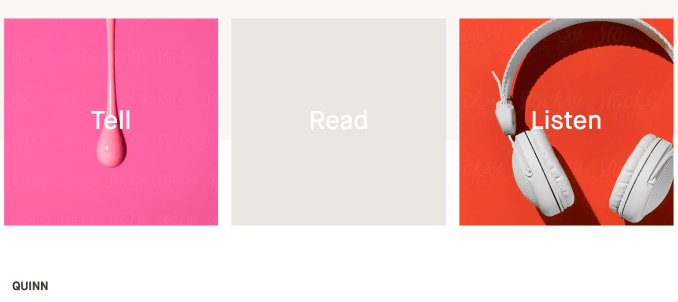
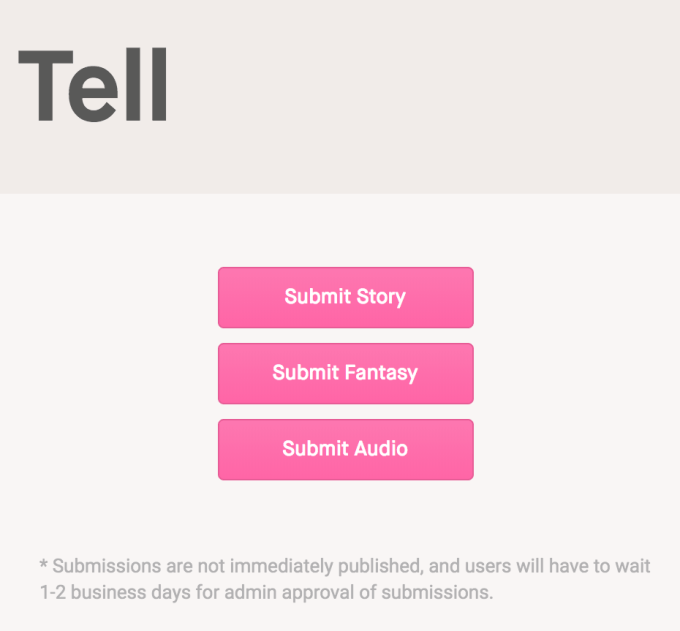
Caroline explains that “There’s no visual content on the site– just audio and written stories. And the whole thing is open source, so people can submit content and fantasies, etc. Everything is vetted by us before it goes on the site.” Caroline is building Quinn with a three-woman team of her best friends she met while at college at Stanford including Greta Meyer, though they plan to relocate to LA after graduation.

“His dream girl was named ‘Quinn'”

The idea for Quinn sprung from a deeply personal need. “I came up with it because I had to leave Stanford my junior year because i was struggling with anorexia and sexual dysfunction that came along with that” Caroline tells me. “I started to do a lot of research into sexual dysfunction cures. There are about 30 FDA-approved drugs for sexual dysfunction for men but zero for women and that’s a big bummer.”

She believes there’s still a stigma around women pleasuring themselves, leading to a lack of products offering assistance. Sure, there are plenty of porn sites but few are explicitly designed for women, and fewer stray outside of visual content. Caroline says photos and videos can create body image pressure, but with text and audio, anyone can imagine themselves in a scene. “Most visual media perpetuates the male gaze . . . all mainstream porn tells one story . . . You don’t have to fit one idea of what a woman should look like.”

That concept fits with the startup’s name “Quinn”, which Caroline says one of her best guy friends thought up. “He said this girl he met — his dream girl — was named ‘Quinn.'”
Caroline took to Reddit and Tumblr to find Quinn’s first creators. Reddit stuck to text and links for much of its history, fostering the kinky literature and audio communities. And when Tumblr banned porn in December, it left a legion of adult content makers looking for a new home. “Our audio ranges from guided masturbation to overheard sex, and there’s also married stories. It’s literally everything. Different strokes for different for folks, know what I mean?” Caroline says with a cheeky laugh.

To establish its brand, Quinn is running social media influencer campaigns where “The basic idea is to make people feel like it’s okay to experience pleasure. It’s hard to make something like masturbation cool, so that’s a little bit of a lofty goal. We’re just trying to make it feel okay, and even more okay than it is for men.”

As for the business model, Caroline’s research found younger women were embarrassed to pay for porn. Instead Quinn plans to run ads, though there could be commerce opportunities too. And since the site doesn’t bombard users with nude photos or hardcore videos, it might be able to attract sponsors that most porn sites can’t.

Evan is “very supportive”

Until monetization spins up, Quinn has the sub-$1 million in funding that Caroline won’t reveal the source of, though she confirms it’s not from her brother. “I wouldn’t say that he’s particularly involved other than he’s one of the most important people in my life and I talk to him all the time. He gives me the best advice I can imagine” the younger sibling says. “He doesn’t have any qualms, He’s very supportive.”

Quinn will need all the morale it can get, as Caroline bluntly admits “we have a lot of competitors”. There’s the traditional stuff like Pornhub, user generated content sites like Make Love Not Porn, and spontaneous communities like on Reddit. She calls $5 million-funded audio porn startup Dipsea “an exciting competitor” though she notes that “we sway a little more erotic than they do, but we’re so supportive of their mission.” How friendly.

Quinn’s biggest rival will likely be outdated but institutionalized site Literotica, which SimilarWeb ranks as the 60th most popular adult website, 631st most visited site overall, showing it gets 53 million hits per month. But the fact that Literotica looks like a web 1.0 forum yet has so much traffic signals a massive opportunity for Quinn. With rules prohibiting Quinn from launching native mobile apps, it will have to put all its effort into making its website stand out if it’s going to survive.
But more than competition, Caroline fears that Quinn will have to convince women to give its style of porn a try. “Basically, there’s this idea that for men, masturbation is an innate drive and for women it’s a ‘could do without it, could do with it’. Quinn is going to have to make a market alongside a product and that terrifies me” Caroline says, her voice building with enthusiasm. “But that’s what excites me the most about it, because what I’m banking on is if you’ve never had chocolate before, you don’t know. But once you have it, you start craving it. A lot of women haven’t experienced raw, visceral pleasure before, [but once we help them find it] we’ll have momentum.”

Most importantly, Quinn wants all women to feel they have rightful access to whatever they fancy. “It’s not about deserving to feel great, You don’t have to do Pilates to use this. You don’t have to always eat right. There’s no deserving with our product. Our mission is for women to be more in touch with themselves and feel fucking great. It’s all about pleasure and good vibes.”


from Social – TechCrunch https://ift.tt/2CJ7i5z Read More Detail!
,

Hyvor Talk – A Commenting Platform For Your Website


Hyvor Talk is a free commenting system for your website, which comes with an in-built reactions plugin. It can be used in your website for free. And, our friendly AJAX-based moderation console allows you to easily moderate the comments and webpages. The best features of Hyvor Talk is Pre-Moderation and Guest Commenting.

View startup


from BetaList - Discover tomorrow's startups, today https://ift.tt/2JP9O05 Read More Detail!
,

Email Verifier – Weed out disposable, non-existent or invalid emails to prevent spamming


Email Verifier, Weed out disposable, non-existent or invalid emails to prevent community spamming or more power to free trials. The email is validated from 7000+ disposable emails, MX Server Check, SMTP Server Communication.

View startup


from BetaList - Discover tomorrow's startups, today https://ift.tt/2Umu0du Read More Detail!

Thursday, 28 March 2019

,

TidyShift – A super-simple way to schedule shifts for your members of staff


TidyShift was built from the ground up with employee scheduling and shift management in mind. This means the system is optimised to save you time and make the task of employee scheduling and efficient a process as possible.

View startup


from BetaList - Discover tomorrow's startups, today https://ift.tt/2V1mSQV Read More Detail!
,

Monocle Reader – Websites you follow, at a glance


Monocle Reader is a modern, easy to use, content-focused feed reader. Follow Twitter, YouTube, blogs and RSS feeds, all in one place. Daily used by it's creator, it gets constant updates and new features.

View startup


from BetaList - Discover tomorrow's startups, today https://ift.tt/2UbtHCs Read More Detail!

Facebook’s handling of Alex Jones is a microcosm of its content policy problem

A revealing cluster of emails leaked to Business Insider offers a glimpse at how Facebook decides what content is objectionable in high profile cases. In this instance, a group of executives at Facebook went hands on in determining if an Alex Jones Instagram post violated the platform’s terms of service or not.

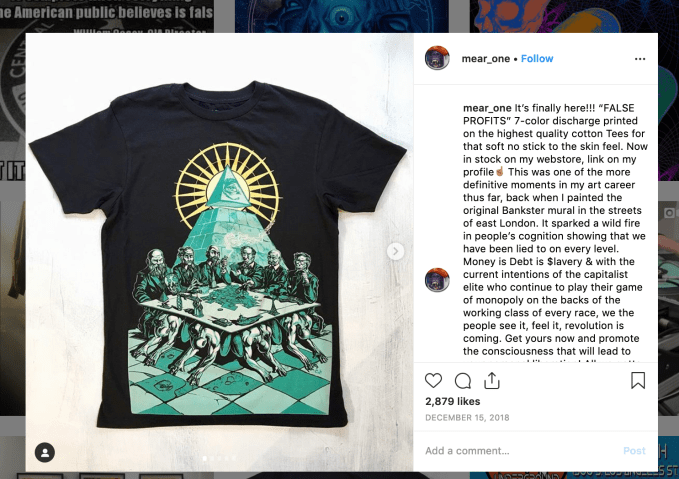
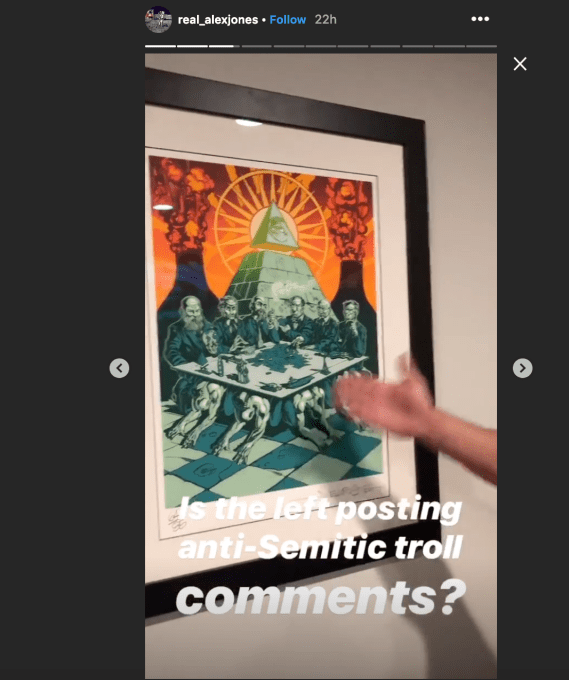
As Business Insider reports, 20 Facebook and Instagram executives hashed it out over the Jones post, which depicted a mural known as “False Profits” by the artist Mear One. Facebook began debating the post after it was flagged by Business Insider for kicking up anti semitic comments on Wednesday.

The company removed 23 of 500 comments on the post that it interpreted to be in clear violation of Facebook policy. Later in the conversation, some of the UK-based Instagram and Facebook executives on the email provided more context for their US-based peers.

Last year, a controversy over the same painting erupted when British politician Jeremy Corbyn argued in support of the mural’s creator after the art was removed from a wall in East London due what many believed to be antisemitic overtones. Because of that, the image and its context are likely better known in the UK, a fact that came up in Facebook’s discussion over how to handle the Jones post.

“This image is widely acknowledged to be anti-Semitic and is a famous image in the UK due to public controversy around it,” one executive said. “If we go back and say it does not violate we will be in for a lot criticism.”

Ultimately, after some back and forth, the post was removed.

According to the emails, Alex Jones’ Instagram account “does not currently violate [the rules]” as “an IG account has to have at least 30% of content violating at any given time as per our regular guidelines.” That fact might prove puzzling once you know that Alex Jones got his main account booted off Facebook itself in 2018 — and the company did another sweep for Jones-linked pages last month.

Whether you agree with Facebook’s content moderation decisions or not, it’s impossible to argue that they are consistently enforced. In the latest example, the company argued over a single depiction of a controversial image even as the same image is literally for sale by the artist elsewhere on both on Instagram and Facebook. (As any Facebook reporter can attest, these inconsistencies will probably be resolved shortly after this story goes live.)

The artist himself sells its likeness on a t-shirt on both Instagram and Facebook and numerous depictions of the same image appear on various hashtags. And even after the post was taken down, Jones displayed it prominently in his Instagram story, declaring that the image “is just about monopoly men and the class struggle” and decrying Facebook’s “crazy-level censorship.”

It’s clear that even as Facebook attempts to make strides, its approach to content moderation remains reactive, haphazard and probably too deeply preoccupied with public perception. Some cases of controversial content are escalated all the way to the top while others languish, undetected. Where the line is drawn isn’t particularly clear. And even when high profile violations are determined, it’s not apparent that those case studies meaningfully trickle down clarify smaller, everyday decisions by content moderators on Facebook’s lower rungs.

As always, the squeaky wheel gets the grease — but two billion users and reactive rather than proactive policy enforcement means that there’s an endless sea of ungreased wheels drifting around. This problem isn’t unique to Facebook, but given its scope, it does make the biggest case study in what can go wrong when a platform scales wildly with little regard for the consequences.

Unfortunately for Facebook, it’s yet another lose-lose situation of its own making. During its intense, extended growth spurt, Facebook allowed all kinds of potentially controversial and dangerous content to flourish for years. Now, when the company abruptly cracks down on accounts that violate its longstanding policies forbidding hate speech, divisive figures like Alex Jones can cry censorship, roiling hundreds of thousands of followers in the process.

Like other tech companies, Facebook is now paying mightily for the worry-free years it enjoyed before coming under intense scrutiny for the toxic side effects of all that growth. And until Facebook develops a more uniform interpretation of its own community standards — one the company enforces from the bottom up rather than the top down — it’s going to keep taking heat on all sides.


from Social – TechCrunch https://ift.tt/2V3TKZg Read More Detail!

Facebook launches searchable transparency library of all active ads

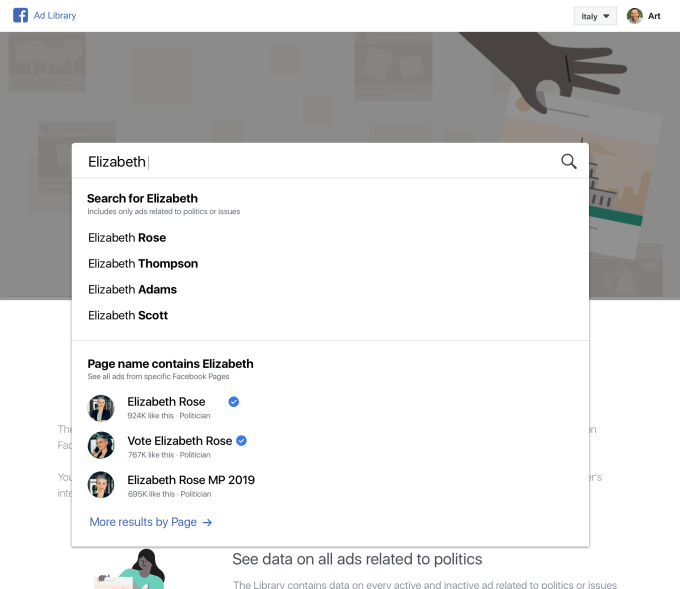
Now you can search Facebook for how much Trump has spent on ads in the past year, which Pages’ ads reference immigration or what a Page’s previous names were. It’s all part of Facebook’s new Ad Library launching today that makes good on its promise to increase transparency after the social network’s ads were used to try to influence the 2016 U.S. presidential elections.

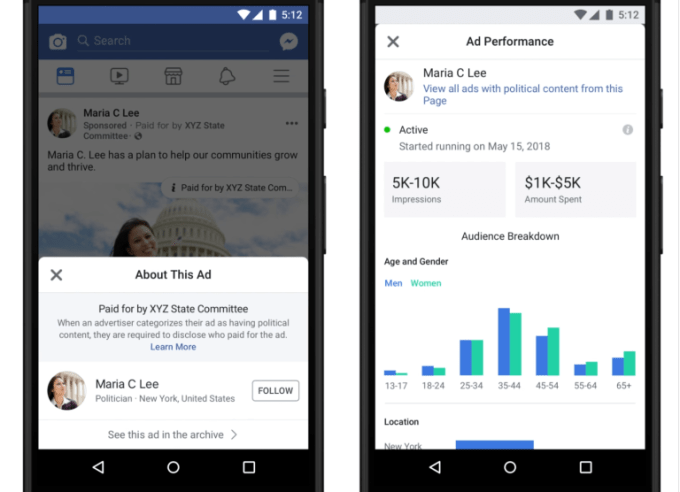
Facebook’s Ads Archive that launched in May 2018 previously only included ads related to politics or policy issues, but now shows all active ads about anything, as well as inactive political and issue ads. It displays Page creation dates, mergers with other Pages, Page name changes and where a Page is managed from, and the option to report an ad for policy violations — all of which will be visible on a new Page Transparency tab on all Pages. Users can search political and issue ads by keyword or other ads by Page name, and Facebook will lend a hand with auto-fill suggestions and previous searches. The Library also displays Pages’ total political ads in the past week or since May 2018. And in mid-May, Facebook will move to offering daily downloadable Ad Library reports as well as monthly and quarterly ones instead of just weekly ones as it currently does.

The improved transparency could allow researchers, government investigators, journalists or anyone play watchdog to ensure ads aren’t being misused to spread misinformation, suppress voting, exacerbate polarization or otherwise be sketchy.

Facebook stopped short of putting all expired and inactive non-political ads in the archive. It wouldn’t say why, but some advertisers have expressed concern that it could let competitors copy their messaging and targeting strategies. Another exemption will be news publishers, who teamed up to complain that sticking “Paid for by” labels on their ads promoting their political coverage made them look like they were campaigning for a certain side. Facebook exempted U.K. publishers in November, and now Facebook will use third-party lists of legitimate U.S. publishers to exempt their ads from the labels and Politics tab of the Ad Library as well.

Facebook is also bringing its political ad labeling to the whole European Union after launching in the U.K. in October. Political and issue ad buyers will have to submit documents and pass technical checks to verify their location and identity that will be reviewed by automated systems and audited by users who can report ads without proper labels. The goal is to prevent people from outside of a country from using ads to meddle in different nations’ elections. Facebook will also add a “Paid for by” label to all political and issue ads on Facebook and Instagram and place active and inactive ones in the Ad Library. The labels will review who bought the ad, their contact details, the budget for that ad, how many people saw it and the age, location and gender demographic details.

Facebook notes that it now has transparency tools revving up in Brazil, India, Ukraine and Israel as those nations prepare for elections. Facebook plans to have political and issue ad-transparency tools available globally by the end of June.

Meanwhile, Facebook is expanding researchers’ and developers’ programmatic access to Ad Library API, which was previously in closed beta. Now anyone with a Facebook developer account who goes through the Identity Confirmation process and agrees to the platform terms of service can use software to sift through and spot trends in the data. To prevent another Cambridge Analytica situation, Facebook tells TechCrunch it will impost rate limits on the API, but won’t disclose them to ensure bad actors can’t toe the line. When asked how else Facebook would safeguard the API given people don’t necessarily abide by the TOS, Satwik Shukla, product manager on the Business Integrity team at Facebook, told me, “this is why we have the Identity Verification process in place. We want to know the identity of someone accessing the data so if they do abuse our platform terms of service . . . we have the ability to revoke access.”

One fascinating move here is that the Ad Library and reports can be accessed even if you don’t have a Facebook account. That could ward off some critics and Congress members who’ve ragged on Facebook for requiring users sign up to access transparency information or stop it from collecting data on them.

Between the depth and convenience of access to Facebook ad data, watchdogs could spot problematic campaigns before influencing too much of the electorate. If someone spots a campaign trying to convince people they can vote by text message, that the Pope endorsed Trump or that are purposefully stoking anger to boost engagement, they could flag the ads to Facebook for removal.

As Facebook being charged with housing discrimination by the U.S. Department of Housing and Urban Development today proves, Facebook has repeatedly failed to stop problematic ads on its own. By opening itself up to assistance, it might not alleviate scrutiny, but at least all the eyes on it can help battle election interference and other abuse.


from Social – TechCrunch https://ift.tt/2TGmE0f Read More Detail!

Twitter introduces a battery-saving ‘Lights Out’ dark mode option

As promised back in January by Twitter CEO Jack Dorsey, the company today is rolling out an even darker version of the app’s existing dark mode. Before, Twitter’s dark theme was more of a blue-ish shade instead of a true black, which not everyone seemed to like. Now, there’s an optional setting that makes the current dark mode more of a pitch black.

To use the new feature, you’ll first visit the Twitter app’s “Settings and Privacy” section, then click on “Display and Sound.” From there, you can toggle on the “Dark mode” which enables the current blue-black theme.

A second option, “Lights out” is offered below. If checked, dark mode ditches the blue tones and becomes black instead.

It’s an interesting choice to not just darken the existing theme, but rather introduce a third option. Most apps offering a dark mode don’t do this – they just offer a bright, white theme and another darker one. Twitter – which doesn’t always do things by the book to say the least – has gone a different route.

A tweak to the dark mode may seem like a minor adjustment to be concerned with, but dark modes today have grown in popularity as larger phone screens became the norm – particularly because they can help to conserve battery life on high-end OLED devices. (And especially on apps used as regularly as Twitter!)

Some people also feel a dark mode is just easier on the eyes when apps are used for long stretches of time.

The topic of dark modes even made its way to The Wall Street Journal which made a case for darker themes becoming standard not only for the battery benefits, but also because they may help lessen device addiction and improve sleep.

Today, a number of apps support dark themes including YouTube, Google, Medium, Reddit, Instapaper, Pocket, iBooks, Kindle, Google Maps and Waze, and others. WhatsApp is also reportedly working on a dark mode, according to recent reports.

Dorsey first announced Twitter’s plans for a new dark mode a few months ago, in response to a customer complaint which called Twitter’s dark mode a “weird blue.”

Twitter says the new Lights Out mode is rolling out today.


from Social – TechCrunch https://ift.tt/2CFyVwo Read More Detail!