Thursday, 3 October 2019

TikTok explains its ban on political advertising

Already under fire for advancing Chinese foreign policy by censoring topics like Hong Kong’s protests and pro-LGBT content, the Beijing-based video app TikTok is now further distancing itself from U.S. social media platforms, like Facebook, Twitter and Instagram, with a ban on political ads on its app.

The company today says it will not allow political ads on TikTok, noting they don’t fit in with the experience the short-form video app aims to offer.

“Any paid ads that come into the community need to fit the standards for our platform, and the nature of paid political ads is not something we believe fits the TikTok platform experience,” says Blake Chandlee, TikTok’s VP of Global Business Solutions, who recently joined the company from Facebook.

“To that end, we will not allow paid ads that promote or oppose a candidate, current leader, political party or group, or issue at the federal, state, or local level – including election-related ads, advocacy ads, or issue ads,” he says.

TikTok further explains that it wants to be known as a place for creative expression, and one that creates a “positive, refreshing environment” that inspires that creativity.

It will further encourage these goals through its products like its fun filters and effects as well as its brand partnerships.

Today, TikTok offers a range of ad opportunities, including in-feed video ads, launch screen ads, and other native ads like its sponsored hashtag challenges. It also more recently launched a beta version of the TikTok Creator Marketplace, which will help to connect brands with TikTok creators for their marketing campaigns.

“Throughout all of this, however, our primary focus is on creating an entertaining, genuine experience for our community,” Chandlee continues. “While we explore ways to provide value to brands, we’re intent on always staying true to why users uniquely love the TikTok platform itself: for the app’s light-hearted and irreverent feeling that makes it such a fun place to spend time,” he says.

Political ads don’t fit with this agenda, the company believes.

But running those sorts of ads also come with significant challenges, as Facebook has found.

It had to create a system to verify the credentials of political advertisers, for example, which requires them to submit identification information like their street address, phone number, business email and website matching the email, tax ID number, or U.S. Federal Election Commmission ID number. It also launched a publicly searchable database of political ads, for transparency’s sake.

As a Chinese-run company, TikTok may not have the resources to run a similar operation. In fact, it seemed to be having trouble cracking down on the hate speech found on its app last year, VICE had reported.

The ban on political ads isn’t really new to TikTok, it’s more of a reiteration of the existing policy — but it’s a statement that TikTok hadn’t made before.

The company tells Techcrunch it decided to address the policy proactively in order to be transparent about its advertising policies — especially as interest in marketing opportunities continues to grow on the platform.


from Social – TechCrunch https://ift.tt/355nOtd Read More Detail!

Europe’s top court sets new line on policing illegal speech online

Europe’s top court has set a new line for the policing of illegal speech online. The ruling has implications for how speech is regulated on online platforms — and is likely to feed into wider planned reform of regional rules governing platforms’ liabilities.

Per the CJEU decision, platforms such as Facebook can be instructed to hunt for and remove illegal speech worldwide — including speech that’s “equivalent” to content already judged illegal.

Although any such takedowns remain within the framework of “relevant international law”.

So in practice it does not that mean a court order issued in one EU country will get universally applied in all jurisdictions as there’s no international agreement on what constitutes unlawful speech or even more narrowly defamatory speech.

Existing EU rules on the free flow of information on ecommerce platforms — aka the eCommerce Directive — which state that Member States cannot force a “general content monitoring obligation” on intermediaries, do not preclude courts from ordering platforms to remove or block illegal speech, the court has decided.

That decision worries free speech advocates who are concerned it could open the door to general monitoring obligations being placed on tech platforms in the region, with the risk of a chilling effect on freedom of expression.

Facebook has also expressed concern. Responding to the ruling in a statement, a spokesperson told us:

“This judgement raises critical questions around freedom of expression and the role that internet companies should play in monitoring, interpreting and removing speech that might be illegal in any particular country. At Facebook, we already have Community Standards which outline what people can and cannot share on our platform, and we have a process in place to restrict content if and when it violates local laws. This ruling goes much further. It undermines the long-standing principle that one country does not have the right to impose its laws on speech on another country. It also opens the door to obligations being imposed on internet companies to proactively monitor content and then interpret if it is “equivalent” to content that has been found to be illegal. In order to get this right national courts will have to set out very clear definitions on what ”identical” and ”equivalent” means in practice. We hope the courts take a proportionate and measured approach, to avoid having a chilling effect on freedom of expression.”

The legal questions were referred to the CJEU by a court in Austria, and stem from a defamation action brought by Austrian Green Party politician, Eva Glawischnig, who in 2016 filed suit against Facebook after the company refused to take down posts she claimed were defamatory against her.

In 2017 an Austrian court ruled Facebook should take the defamatory posts down and do so worldwide. However Glawischnig also wanted it to remove similar posts, not just identical reposts of the illegal speech, which she argued were equally defamatory.

The current situation where platforms require notice of illegal content before carrying out a takedown are problematic, from one perspective, given the scale and speed of content distribution on digital platforms — which can make it impossible to keep up with reporting re-postings.

Facebook’s platform also has closed groups where content can be shared out of sight of non-members, and where an individual could therefore have no ability to see unlawful content that’s targeted at them — making it essentially impossible for them to report it.

While the case concerns the scope of the application of defamation law on Facebook’s platform the ruling clearly has broader implications for regulating a range of “unlawful” content online.

Specifically the CJEU has ruled that an information society service “host provider” can be ordered to:

  • … remove information which it stores, the content of which is identical to the content of information which was previously declared to be unlawful, or to block access to that information, irrespective of who requested the storage of that information;
  • … remove information which it stores, the content of which is equivalent to the content of information which was previously declared to be unlawful, or to block access to that information, provided that the monitoring of and search for the information concerned by such an injunction are limited to information conveying a message the content of which remains essentially unchanged compared with the content which gave rise to the finding of illegality and containing the elements specified in the injunction, and provided that the differences in the wording of that equivalent content, compared with the wording characterising the information which was previously declared to be illegal, are not such as to require the host provider to carry out an independent assessment of that content;
  • … remove information covered by the injunction or to block access to that information worldwide within the framework of the relevant international law

The court has sought to balance the requirement under EU law of no general monitoring obligation on platforms with the ability of national courts to regulate information flow online in specific instances of illegal speech.

In the judgement the CJEU also invokes the idea of Member States being able to “apply duties of care, which can reasonably be expected from them and which are specified by national law, in order to detect and prevent certain types of illegal activities” — saying the eCommerce Direction does not stand in the way of states imposing such a requirement.

Some European countries are showing appetite for tighter regulation of online platforms. In the UK, for instance, the government laid out proposals for regulating a board range of online harms earlier this year. While, two years ago, Germany introduced a law to regulate hate speech takedowns on online platforms.

Over the past several years the European Commission has also kept up pressure on platforms to speed up takedowns of illegal content — signing tech companies up to a voluntary code of practice, back in 2016, and continuing to warn it could introduce legislation if targets are not met.

Today’s ruling is thus being interpreted in some quarters as opening the door to a wider reform of EU platform liability law by the incoming Commission — which could allow for imposing more general monitoring or content-filtering obligations, aligned with Member States’ security or safety priorities.

“We can trace worrying content blocking tendencies in Europe,” says Sebastian Felix Schwemer, a researcher in algorithmic content regulation and intermediary liability at the University of Copenhagen. “The legislator has earlier this year introduced proactive content filtering by platforms in the Copyright DSM Directive (“uploadfilters”) and similarly suggested in a Proposal for a Regulation on Terrorist Content as well as in a non-binding Recommendation from March last year.”

Critics of a controversial copyright reform — which was agreed by European legislators earlier this year — have warned consistently that it will result in tech platforms pre-filtering user generated content uploads. Although the full impact remains to be seen, as Member States have two years from April 2019 to pass legislation meeting the Directive’s requirements.

In 2018 the Commission also introduced a proposal for a regulation on preventing the dissemination of terrorist content online — which explicitly included a requirement for platforms to use filters to identify and block re-uploads of illegal terrorist content. Though the filter element was challenged in the EU parliament.

“There is little case law on the question of general monitoring (prohibited according to Article 15 of the E-Commerce Directive), but the question is highly topical,” says Schwemer. “Both towards the trend towards proactive content filtering by platforms and the legislator’s push for these measures (Article 17 in the Copyright DSM Directive, Terrorist Content Proposal, the Commission’s non-binding Recommendation from last year).”

Schwemer agrees the CJEU ruling will have “a broad impact” on the behavior of online platforms — going beyond Facebook and the application of defamation law.

“The incoming Commission is likely to open up the E-Commerce Directive (there is a leaked concept note by DG Connect from before the summer),” he suggests. “Something that has previously been perceived as opening Pandora’s Box. The decision will also play into the coming lawmaking process.”

The ruling also naturally raises the question of what constitutes “equivalent” unlawful content? And who and how will they be the judge of that?

The CJEU goes into some detail on “specific elements” it says are needed for non-identical illegal speech to be judged equivalently unlawful, and also on the limits of the burden that should be placed on platforms so they are not under a general obligation to monitor content — ultimately implying that technology filters, not human assessments, should be used to identify equivalent speech.

From the judgement:

… it is important that the equivalent information referred to in paragraph 41 above contains specific elements which are properly identified in the injunction, such as the name of the person concerned by the infringement determined previously, the circumstances in which that infringement was determined and equivalent content to that which was declared to be illegal. Differences in the wording of that equivalent content, compared with the content which was declared to be illegal, must not, in any event, be such as to require the host provider concerned to carry out an independent assessment of that content.

In those circumstances, an obligation such as the one described in paragraphs 41 and 45 above, on the one hand — in so far as it also extends to information with equivalent content — appears to be sufficiently effective for ensuring that the person targeted by the defamatory statements is protected. On the other hand, that protection is not provided by means of an excessive obligation being imposed on the host provider, in so far as the monitoring of and search for information which it requires are limited to information containing the elements specified in the injunction, and its defamatory content of an equivalent nature does not require the host provider to carry out an independent assessment, since the latter has recourse to automated search tools and technologies.

“The Court’s thoughts on the filtering of ‘equivalent’ information are interesting,” Schwemer continues. “It boils down to that platforms can be ordered to track down illegal content, but only under specific circumstances.

“In its rather short judgement, the Court comes to the conclusion… that it is no general monitoring obligation on hosting providers to remove or block equivalent content. That is provided that the search of information is limited to essentially unchanged content and that the hosting provider does not have to carry out an independent assessment but can rely on automated technologies to detect that content.”

While he says the court’s intentions — to “limit defamation” — are “good” he points out that “relying on filtering technologies is far from unproblematic”.

Filters can indeed be an extremely blunt tool. Even basic text filters can be triggered by words that contain a prohibited spelling. While applying filters to block defamatory speech could lead to — for example — inadvertently blocking lawful reactions that quote the unlawful speech.

The ruling also means platforms and/or their technology tools are being compelled to define the limits of free expression under threat of liability. Which pushes them towards setting a more conservative line on what’s acceptable expression on their platforms — in order to shrink their legal risk.

Although definitions of what is unlawful speech and equivalently unlawful will ultimately rest with courts.

It’s worth pointing out that platforms are already defining speech limits — just driven by their own economic incentives.

For ad supported platforms, these incentives typically demand maximizing engagement and time spent on the platform — which tends to encourage users to spread provocative/outrageous content.

That can sum to clickbait and junk news. Equally it can mean the most hateful stuff under the sun.

Without a new online business model paradigm that radically shifts the economic incentives around content creation on platforms the tension between freedom of expression and illegal hate speech will remain. As will the general content monitoring obligation such platforms place on society.


from Social – TechCrunch https://ift.tt/2pGk8xD Read More Detail!

Instagram launches Threads, a Close Friends chat app with auto-status

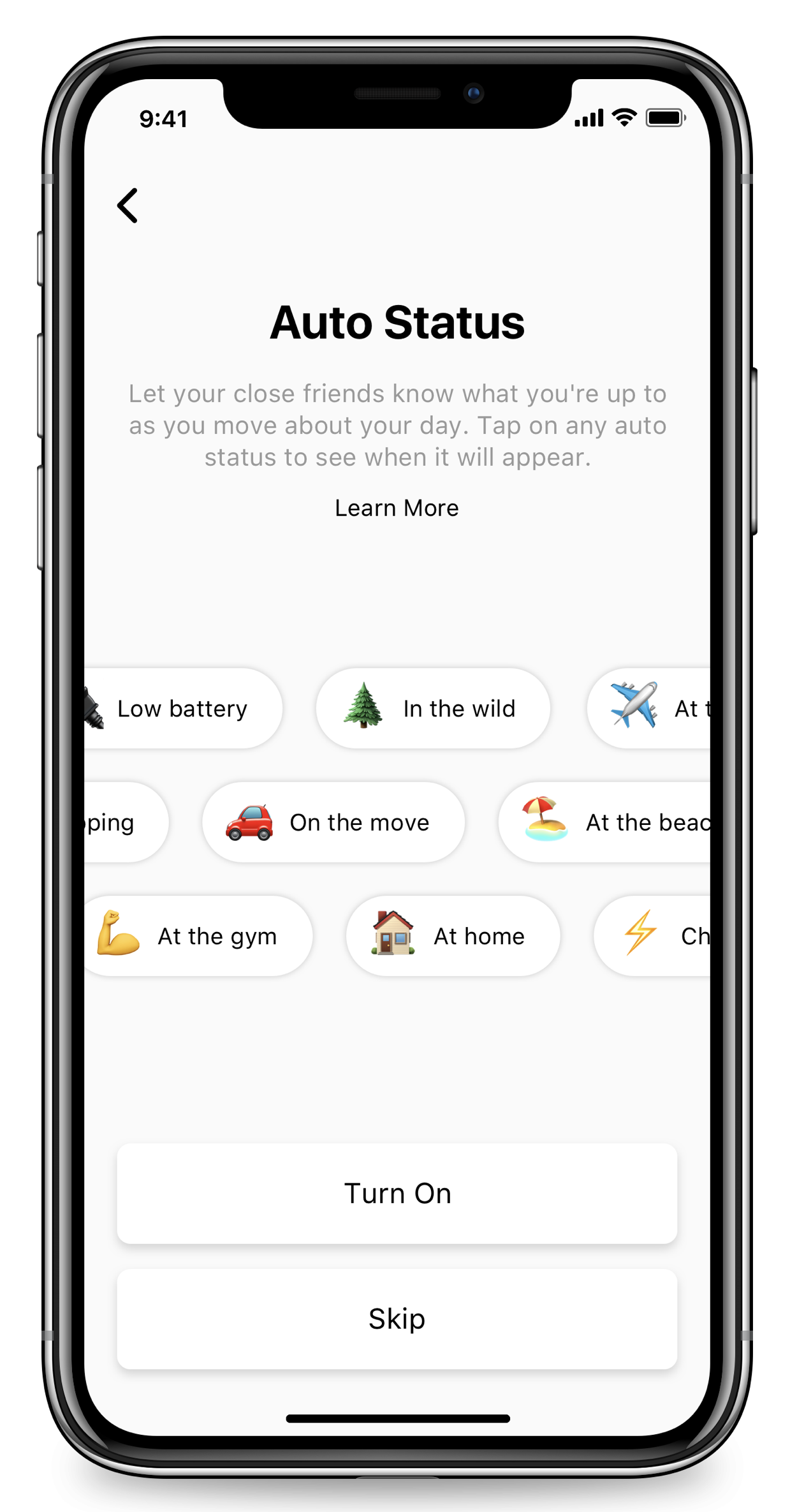
What if Instagram could automatically tell your Close Friends you’re 🏠 (home), πŸ€“ (working), πŸš— (on the move), or πŸ›‹ (chilling and might want to hang out)? That’s the idea behind Instagram’s new companion app Threads, a Close Friends-only messaging experience that opens to the camera with shortcuts for instantly sending specific people photos and videos. Threads offers two brand new features called Status and Auto-Status that allow you to manually set an emoji as an away message to show Close Friends what you’re up to, or opt in to letting Instagram select one automatically based on your location, accelerometer, and even your phone’s battery level.
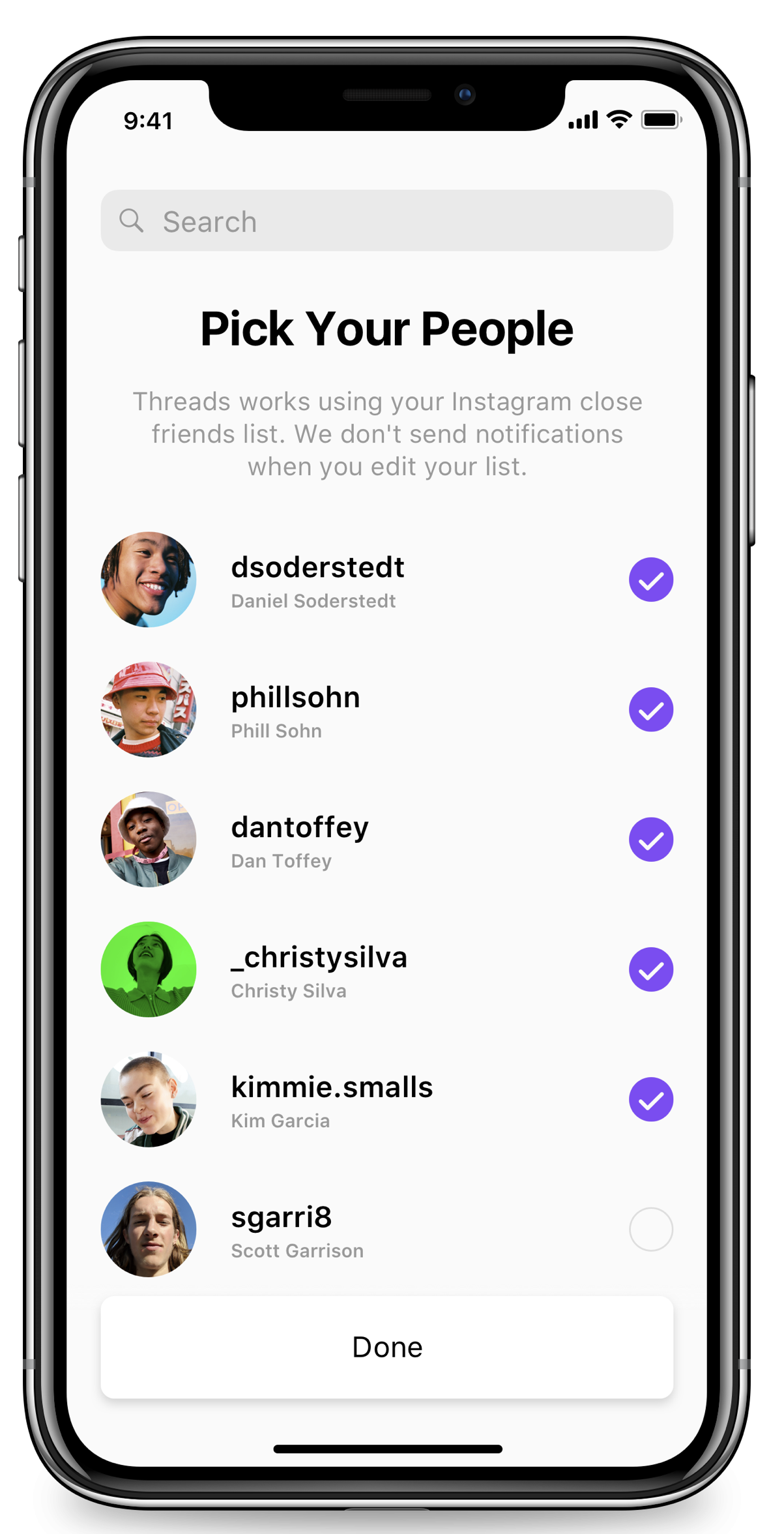
Instagram Threads Auto StatusLaunching globally today on iOS and Android, this is Facebook and Instagram’s next big swing at Snapchat, specifically targeting its top use case: rapid-fire camera and text messaging with your best friends. Sick of randos in your inbox? Only people in your Instagram Close Friends list show up in Threads so you can trust its notifications are important. You can still just use Instagram Direct in the main app or the two in parallel, though.

What’s most unique is that Threads finally sees the launch the Facebook “Your Emoji” status feature we reported it was prototyping 18 months ago. Threads Status and Auto-Status offer conversation starters, contextual clues to why someone might not respond, and opportunities to meet up offline. But importantly, it leaves out a map or any exact location sharing to avoid being creepy and instead focus on what Close Friends are up to — which determines if they can chat or hang out more than where they are.

Threads offers “persistent connection”, Instagram’s Director of consumer product management Robby Stein tells me. It was designed with three priorities: the ability to “fully control who can reach you”, speed because “If most of your messages only go to a couple of people, why isn’t the experience built around that?”, and “Having more of a connection through the day . . . even if you don’t have time for a conversation.”

By building Threads as a separate app, Instagram has little to lose if it flops and could learn about what features to pull back into its main app. But if it succeeds, Threads cement itself as where you stay in touch with your favorite people, while pigeonholing other messaging options like SMS, WeChat, as Snapchat as noisy channels full of unwanted alerts.

Close Friends Only

Social networks have an inevitable problem. Eventually out of coincidence and courtesy, you add too many people as friends, filling the apps with people who’s content you don’t care about and who’s messages you don’t always want. Facebook, the catch-all network for everything from family to bosses to acquaintances. That leads people to feel uncomfortable sharing too much, and to distrust that the notifications they get are important.

Instagram Close Friends ThreadsNow Instagram is doubling-down on Close Friends which launched last November at TechCrunch Disrupt Berlin to let you secretly set a special group of best pals who get to see special Stories you set as visible to only them. Facebook had tried complicated Lists products in the past and never seen them gain significant traction because it’s too tough to keep track of who’s in each. Instagram nailed the concept with a single list you edit as needed, though people don’t know if they’re added or removed. I’m surprised Facebook doesn’t already have its own Close Friends feature and it’d be smart to build one.

Instagram already tried building its own standalone Direct messaging app, but shut it down after low usage since it didn’t offer anything beyond what you already got in the main app. Casey Newton of The Verge reported Instagram was building an app with automatic activity sharing in August.

Now with Threads, Close Friends creates the foundation for something different. The only entries in your inbox are Close Friends, which you can edit in the app with the list syncing with your list on Instagram. You can hide any of those chats or group chats with exclusively close friends if you don’t want to see them.

When you open Threads, you’ll see open immediately to the camera like Snapchat. At the bottom are “Camera Shortcuts” that show friends’ faces you can tap on to send a photo or tap and hold for a video. You can also tap the “default camera” shutter and the select everyone you want to message. Swiping up reveals the Threads inbox, where you can tap into a conversation for a full-featured messaging experience just like in Instagram Direct. “I see more of my wife’s life now that we’re in this product” Stein tells me.

With Status, you can set an emoji as your away message for one to four hours. You can select from pre-made ones with their own text tag lines, or define a new one from the full range of emoji. Meanwhile, Auto-Status defaults to off but can be turned on to give Instagram the ability to use data signals to choose an emoji for you. It will match your exact location to specific places like Home, Work, cafes, bars, traveling out of town and more. Your accelerometer lets it show if you’re biking or driving. And your phone battery can let it display that you’re low on juice or currently charging.

Instagram threads logo

Why share my batter status? Stein tells me that if you’re charging your phone, you might not be next to it and could be slow to respond. Or if you’re low battery, you might suddenly stop replying all together. That’s helpful knowledge to share with Close Friends even if it’d be weird to post it more widely.

One problem is that who you want to message with often might include family or co-workers that you don’t want to have see your Close Friends Stories, but the list is used for both. At the same time, Threads could boost Close Friends usage, leading people to share more intimate and silly stuff on Stories which do help Instagram earn money thanks to the ads in between.

For now, though, Instagram tells me there’s no plan to monetize Threads directly or show any ads in it. In fact, Facebook won’t even use the exact locations pulled from the app to power ad targeting. Coordinates are only sent so it can match them to locations like a movie theater to show you’re at the movies. Facebook won’t store the locations and they only stay on your device for a short period before they’re deleted.

Still, Auto-Status is sure to rile some who think Facebook and Instagram are too creepy to give any more data. But if the convenience of knowing your friend is available to hang out or is probably too stressed for a chat outweighs the company’s toxic brand, Instagram could develop an important new social behavior. Even if it doesn’t monetize it directly, Threads could keep users locked into the Insta ecosystem where they’ll see plenty of feed and Story ads between message bouts.

Social graph bloat causes a chilling effect on sharing. It’s what Snapchat, Path, and other apps have tried to solve but ended up succumbing to. Instagram accepts that you’ll inevitably connect with people you don’t care much about out of social obligation, pity, or apathy. But by building whole products around just sharing with your favorite subset of people, it could unlock what we self-center — the real us.


from Social – TechCrunch https://ift.tt/2oaK97X Read More Detail!
,

mettleAI – Using AI to predict mental health deterioration before it happens


MettleAI predicts substance abuse and overall mental health regressive behaviour before it happens using a predictive model created with ML/AI. The algorithm evaluates human inputs, behavioural data, and wearable statistics to provide a prediction for the risk of a relapse. Healthcare providers are empowered with real-time analytics to make informed decisions, addressing those who are most at risk all while personalizing the treatment plan for each individual.

View startup


from BetaList - Discover tomorrow's startups, today https://ift.tt/2OnBU2S Read More Detail!
,

Paper – A "no-cloud" note taking app with "no-internet" sharing


Paper is πŸš€A "no-cloud" note taking app with "no-internet" sharing.

Features: PWA Based, OpenSource, Easy Share, No Internet, LocalStorage, Share through QR, Dark/Light Theme

View startup


from BetaList - Discover tomorrow's startups, today https://ift.tt/2oNPVwa Read More Detail!
,

Balsa – Open source knowledgebase for growing companies


Balsa is an open source knowledge management platform that meets even the most demanding privacy and security standards. It helps securely manage your company knowledge, tasks, tables and more, without exposing organizational data to any 3rd parties.

View startup


from BetaList - Discover tomorrow's startups, today https://ift.tt/2oLq1t7 Read More Detail!

Wednesday, 2 October 2019

,

Freesy – We connect tech freelancers with hiring companies


Freesy is a platform that connects tech freelancers with companies looking to hire the best talent in London.

Once there's a match, we take care of all the admin, payroll and invoicing so freelancers get paid on time, every single time.

View startup


from BetaList - Discover tomorrow's startups, today https://ift.tt/2nT9hA6 Read More Detail!
,

testmail.app – Get unlimited mailboxes for end-to-end email testing with our GraphQL API


testmail.app gives you unlimited real email addresses and mailboxes for programmatically testing new user signups, transactional emails, drip campaigns, spam scores, etc. with our GraphQL API.

Get started on the forever free plan.

View startup


from BetaList - Discover tomorrow's startups, today https://ift.tt/2pwXQhS Read More Detail!

Will Smith just dropped $10K on a startup that pitched him on Disrupt’s stage

Actor and Hollywood media mogul Will Smith surprised the TechCrunch Disrupt SF 2019 audience this afternoon by announcing he would invest $10K in a startup that pitched to him onstage as part of “elevator pitch” contest, where the winner would get to take a selfie with the star. The company, Socionado.com, helps companies with their social media presence. However, what got Smith’s attention was their well-delivered pitch, he said.

The startups didn’t get much time to prepare, having been plucked from the Startup Alley earlier in the day.

In addition to responding well to the pitch itself, Smith also liked the concept and the business model.

“As I built out my social media team, that was the idea — I wanted to take back my storytelling,” said Smith. “I think that’s hugely important.”

“That was really the best pitch so we’re gonna rock a selfie,” Smith said, jumping up to snap a photo with the founder.

Smith’s investment strategy isn’t usually this off-the-cuff, however.

Speaking onstage at the Disrupt conference, he also offered more details on his plans for Dreamers VC, the investment firm founded with Japanese soccer star Keisuke Honda, which was announced last year by Honda’s management firm KSK Group.

Smith noted the firm has an interest in “doing good” with its funds — pointing, in particular, to an investment in “Boring tech.” (He actually means The Boring Company, per the Dreamers VC website, where it’s listed alongside a host of others.)

He also offered a little background on how Dreamers VC came to be in the first place.

“Well, you know, I met with [Keisuke Honda]  and we just hit it off immediately. And, you know, we felt like there was a beautiful intersection between being able to create businesses, but also to stay focused on solving problems of the world,” Smith explained. Honda already had banking relationships in Japan that were looking to make their way into the U.S.

“So the relationship worked out well,” he said.

Plus, Smith adds, “I had already been investing and he had already been in investing and our values were were in alignment. We want to solve some of the world’s problems. We want to do well by doing good.”


from Social – TechCrunch https://ift.tt/2puqAI5 Read More Detail!

YouTube’s Neal Mohan describes the company’s efforts on safety and trust

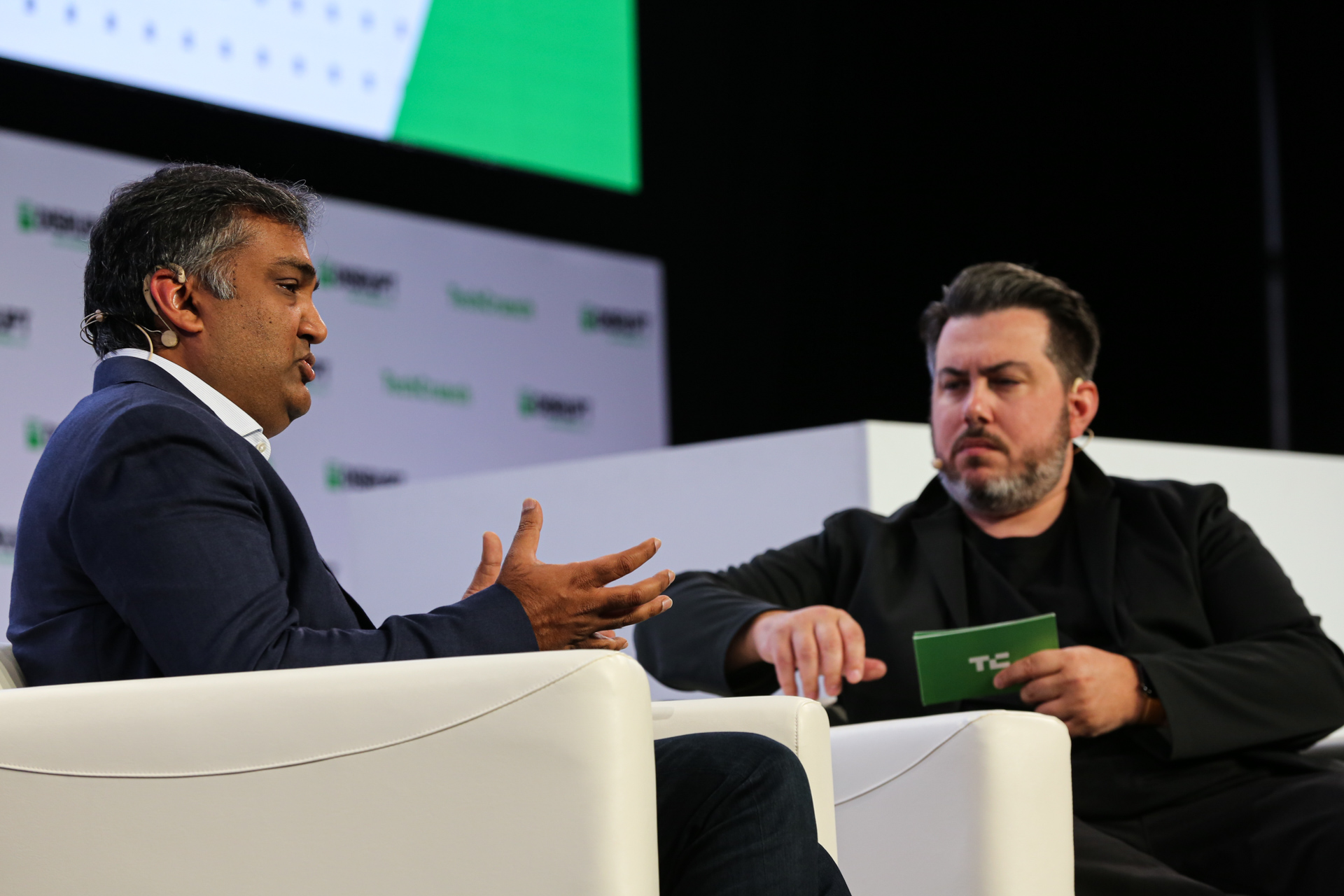
YouTube Chief Product Officer Neal Mohan gave an update on all things YouTube at TechCrunch Disrupt SF. He touched on many different subjects, from YouTube Music updates to advertiser-friendly guidelines and tweaking YouTube’s recommendation algorithm.

Mohan started right away with an update on YouTube Music. YouTube has accidentally become one of the biggest music streaming services in the world. And the company plans to take advantage of that.

“Everybody knows music has been a core part of YouTube really since the day of the founding of the product,” he said.

While YouTube Premium started as YouTube Red, the company rebranded its premium subscription service with a focus on YouTube Music. "It's a music subscription service and it also brings the best of YouTube,” Mohan said.

It is now available in 71 different countries and YouTube is rolling out three personalized playlists today to make the service more competitive with Spotify and Apple Music.

With a renewed focus on YouTube Music, Google has decided to phase out Google Play Music to focus on YouTube Music instead. But there are still some missing features on YouTube Music.

In particular, YouTube is working on porting three Google Play Music features: The ability to have a locker with personal music files, the ability to play local audio files on your Android device and the ability to transfer your playlists from Google Play Music to the YouTube Music app.

“We'd like to do it in the near future and but we want to make sure we nail that,” Mohan said. So it’s still a work in progress.

Many YouTube creators have criticized the platform as some of their videos have been demonetized. Mohan mostly recapped some of YouTube’s efforts on this front to make sure that videos aren’t demonetized for no reason.

“In addition to our community guidelines, we also have something called the advertiser-friendly guidelines. Those are the sets of rules that govern what type of content is eligible for monetization and what is not,” Mohan said.

The company now has an appeal system so that creators can contest a demonetization decision. “There's an SLA turnaround time for processing that appeal,” Mohan said.

YouTube creators themselves can give advance warnings by saying what’s in a video, such as swear words, etc. Mohan believes that this model will make monetization more stable for YouTube creators.

When it comes to autoplaying videos, watch next and personalized recommendations, YouTube has also been criticized for recommending conspiracy videos or simply weird stuff that makes you uncomfortable.

“Lots of users are recommended content that you would call sort of more mainstream sometimes it’s in the other direction,” Mohan said. “And one thing that we want to avoid is sending users down paths to more and more extreme content, especially when that content might not be quite policy violations — so it still exists on our platform — but it's borderline in nature or maybe it's spreading you know harmful misinformation in some way or the other.”

YouTube started tweaking the recommendation algorithm back in January. Mohan says that there’s been a 50% reduction in user exposure to content “that we would deem to be in that bucket of sort of borderline or maybe harmful misinformation.”

disrupt neal mohan youtube 0153

TechCrunch’s Matthew Panzarino and Neal Mohan also talked about Lilly Singh, a YouTube star who now has her own late night talk show on NBC — A Little Late with Lilly Singh.

“When they were looking for a replacement host for that late night show, it made sense,” Mohan said. “Lilly has this natural way of connecting with the audience. But also because the nature of a lot of that late night content in particular is that it's often viewed — not as it's linearly broadcasted on live channels — but the next day on YouTube.”

And Mohan doesn’t think she’s turning her back to YouTube. “She knows that her core audience, her most passionate fans are on YouTube,” he said.

Finally, Mohan had two pieces of advice for people working on subscription businesses. First, make sure that the message is clear and that people know why they should subscribe. Second, optimize the funnel from user acquisition to retention, monetization, etc.

disrupt neal mohan youtube 0137


from Social – TechCrunch https://ift.tt/2ptl0FV Read More Detail!

Rune raises $2M to help you find new friends in mobile games, starting with Brawl Stars

Multiplayer games are more fun when you get to play with the same crew regularly. Playing with the same people means better cooperation, deeper strategies, and, if all goes well, more wins.

But what if none of your friends play the game you want to play?

Rune, a company out of Y Combinator’s Winter 2019 class, wants to use AI to help you find the right people to play with, connecting you via voice chat. And they’ve just closed a $2M seed round to get it done.

The round was led by the gaming-focused firm Makers Fund, and backed by byFounders, E14 Fund, VentureSouq, and Gmail creator Paul Buchheit.

The first game they’re supporting is Brawl Stars, the popular free-to-play mobile game built by Clash of Clans creator Supercell. It’s a pretty perfect game for something like this — it’s a game where strategic teams have a solid advantage, but where building such a team from scratch can be tough. Brawl Stars will automatically match you with teammates if you’re playing alone, but in-game communication is limited and random players tend to only hang around for a game or two.

brawl stars

Supercell’s Brawl Stars

When you first sign up, Rune asks you a handful of questions to start tuning their matchmaking algorithm. Which language(s) do you speak? How much Brawl Stars have you played (how many “trophies” have you earned?) What sort of gameplay are you looking for right now — are you just messing around, or are you looking for nothing but wins? Push a button, and the matchmaking system starts its search.

The more you play, the better the algorithm is tuned. If you seem to have longer play sessions with certain players, for example, it can prioritize matchmaking you with players their algorithms see as similar. (For the curious: while they will tune the matchmaking algorithms based on metadata like who you’re chatting with and for how long, Rune co-founder Sanjay Guruprasad tells me that they don’t store or analyze the actual voice communication in any way.)

The company says that players have collectively spent around 50,000 hours chatting through the app since launching in March of 2019.

Rune’s matchmaking and voice chat systems are currently limited to two players. Since Brawl Stars (and plenty of other Battle Royale/arena style games) have game modes that support up to three players per team, Sanjay tells me that 3-player matchmaking and voice chat are “both in the pipeline and will come out soon.”

Rune plans to support other games beyond Brawl Stars in the future — in fact, driving traffic to other games is part of their plans to monetize the free app. Once you’ve befriended someone, you’re free to use Rune for voice chat with whatever game you want; it just runs in the background, so what you’re playing doesn’t matter too much.

Rune is available for free on iOS here, and on Android here.


from Social – TechCrunch https://ift.tt/2oqZ1io Read More Detail!