Thursday, 7 June 2018

Photos on social media can predict the health of neighborhoods

The images that appear on social media – happy people eating, cultural happenings, and smiling dogs – can actually predict the likelihood that a neighborhood is “healthy” as well as its level of gentrification.

From the report:

So says a groundbreaking study published in Frontiers in Physics, in which researchers used social media images of cultural events in London and New York City to create a model that can predict neighborhoods where residents enjoy a high level of wellbeing — and even anticipate gentrification by 5 years. With more than half of the world’s population living in cities, the model could help policymakers ensure human wellbeing in dense urban settings.

The idea is based on the concept of “cultural capital” – the more there is, the better the neighborhood becomes. For example, if there are many pictures of fun events in a certain spot you can expect a higher level of well-being in that area’s denizens. The research also suggests that investing in arts and culture will actively improve a neighborhood.

“Culture has many benefits to an individual: it opens our minds to new emotional experiences and enriches our lives,” said Dr. Daniele Quercia. “We’ve known for decades that this ‘cultural capital’ plays a huge role in a person’s success. Our new model shows the same correlation for neighborhoods and cities, with those neighborhoods experiencing the greatest growth having high cultural capital. So, for every city or school district debating whether to invest in arts programs or technology centers, the answer should be a resounding ‘Yes!'”

The Cambridge-based team looked at “millions of Flickr images” taken at cultural events in New York and London and overlaid them on maps of these cities. The findings, as we can imagine, were obvious.

“We were able to see that the presence of culture is directly tied to the growth of certain neighborhoods, rising home values and median income. Our model can even predict gentrification within five years,” said Quercia. “This could help city planners and councils think through interventions to prevent people from being displaced as a result of gentrification.”

The team expects to be able to assess the health of citizens using the same method, overlaying pictures of food on maps in order to find food deserts and spots where cafes and croissants are on the rise. Just imagine: all those Instagrammed photos of your favorite sandwiches will some day help researchers build happier cities.


from Social – TechCrunch https://ift.tt/2LuYXUK Read More Detail!

Wednesday, 6 June 2018

,

ICOchamps – Initial Coin Offering evaluation platform


ICOchamps is an independent ICO (Initial Coin Offering) rating platform, aiming to help cryptocurrency investors choose the best ICOs to invest in. We try to be as objective as possible and therefore follow a certain rating methodology.

Currently our primary focus relies on short-term investments, but a "Longterm Potential" indicator will be coming soon.

View startup


from BetaList - Discover tomorrow's startups, today https://ift.tt/2LtTzBh Read More Detail!

Bumble CEO Whitney Wolfe Herd is coming to Disrupt SF

Bumble founder and CEO Whitney Wolfe Herd has always done things her own way.

Whether it’s standing up for her political beliefs, building a company with fully outsourced engineers, or avoiding the usual startup fundraising runaround, Wolfe Herd follows her own instincts in building a business. Which is why we’re super excited to announce that Whitney Wolfe Herd will join us at TC Disrupt SF 2018.

Wolfe Herd first came on to the scene as a cofounder and VP of Marketing at Tinder, where she helped grow the dating app into one of the world’s biggest dating platforms. But after a lawsuit over sexual harassment and discrimination, which was settled out of court, Wolfe Herd left the company to build an app focused on compliments and positive affirmations.

Originally, she wanted nothing to do with the dating space. But after meeting Andrey Adreev, Badoo founder and Bumble’s majority stake holder, she realized that giving women a voice in digital dating could be revolutionary. And so, Bumble was born in 2014.

The app has grown to 30 million users, and continues to grow in popularity based on a simple premise: women make the first move.

But Wolfe Herd’s ambitions don’t stop at dating. The 28-year-old founder has added new verticals to the app, letting users find friends and make professional connections via Bumble.

And all the while, Bumble’s cap table has never changed, with Wolfe Herd’s 20 percent stake as yet undiluted. Wolfe Herd was named one of Time 100’s most influential people this year, and has herself become a brand that represents authenticity and self-empowerment.

We can’t wait to talk to Wolfe Herd at Disrupt SF 2018. You can buy tickets to the show here.


from Social – TechCrunch https://ift.tt/2xOS0w6 Read More Detail!

Facebook is funding news programs from CNN, Fox News, Univision and others

Facebook has unveiled its initial lineup of news programming that will be airing in a dedicated section of Watch, the original video content initiative that the social network launched last year.

While these shows are being produced by outside media organizations, it’s actually Facebook that’s funding them. In a blog post, Head of News Partnerships Campbell Brown described this as an extension of the company’s announcement in January that it would prioritize meaningful social interaction over publisher content.

While that decision took a toll on digital publishers, Brown echoes CEO Mark Zuckerberg’s rationale for the move, saying that while there will be less news in users’ feeds, what remains should be “trustworthy, informative, and local.”

Here’s how Brown describes the news initiative:

This first lineup of funded shows includes news publishers from broadcast to digital native, national and local. The shows will be hosted by award-winning journalists, as well as new faces, and the formats will vary from a mix of daily briefings, weekly deep dives, and live breaking news coverage. They’ll debut later this summer, and we’ll announce additional shows in the coming weeks. We will work closely with our publisher partners to experiment with these different formats to understand what works, and they will have full editorial control of their shows.

The shows include:

  • A daily news show from ABC News
  • “Chasing Corruption,” a series from Alabama’s Advance Local that interviews watchdog journalists
  • A weekly explainer program from ATTN:
  • CNN’s “Anderson Cooper Full Circle,” a weekday news brief featuring Cooper and guests
  • Daily updates from Fox News’ Shepard Smith and others.
  • A twice weekly show from Mic.
  • Univision’s “Real America with Jorge Ramos,” where Ramos interviews immigrants from diverse backgrounds. Univision will also air a daily news roundup in Spanish.


from Social – TechCrunch https://ift.tt/2Ju16mq Read More Detail!
,

Reason8 – Turn Conversations into Summaries


Reason8 is an AI-powered service for automatic note taking and preparation of summaries for in-person business meetings.

We use multiple smartphones and an AI-based approach to boost the quality of speaker separation and drafting of meeting summaries. We are actively working on advanced summarization, collaboration features for teamwork, and integrations with project management services and communication tools. We look towards radically improving the effectiveness of your meetings.

View startup


from BetaList - Discover tomorrow's startups, today https://ift.tt/2M3lGbN Read More Detail!

Facebook introduces new bidding support for in-app ads

Facebook is expanding its support for header bidding, a technology that allows publishers to auction off ad impressions through real-time bidding between ad networks.

The company announced its support for header bidding on the mobile web last year. Today, it’s adding something similar for in-app advertising.

That means app publishers who use header bidding can include ads from Facebook’s Audience Network in their auctions. To enable this, Facebook is partnering with Fyber, MAX and Twitter’s MoPub.

Here’s how Facebook’s Vijay Balan laid out the benefits of the new approach:

Currently, ad networks are called one-by-one until an app ad is filled, determined by historical average CPMs rather than which buyer is willing to pay the most. This method often overlooks a network willing to pay more for an impression because it is lower in the chain.

App bidding enables app publishers and developers to establish an impartial and open auction over their ad inventory. All advertising networks are called simultaneously and the highest bidder for the placement wins, thereby providing publishers with opportunities to earn more. Publishers can maximize their access to high value advertisers, fueling the creation of sustainable ad businesses that help ensure people continue to enjoy access to high quality free content.

Balan said Facebook has already been testing this with publishers who have their own ad-serving technology, including Rovio, Talefun and GameInsight. Those early tests have seen revenue gains of up to 20 percent.


from Social – TechCrunch https://ift.tt/2kT9gqo Read More Detail!
,

Optic – AI Assistant that help you Code


Optic helps write and maintain the routine parts of a codebase so your team can focus on the code that matters most. It works with you project throughout its lifecycle because it can read existing code and even work with generated code that has been modified.

Optic understands that most of your code is related and can: Transform Code: Use code in your project as the input to generate related code. ie Schema -> CRUD Endpoints, Endpoint -> Form. Sync Code: Whenever you change a key part of your code (ie adding a field to a model), Optic will generate a pull request that updates all the related code (Endpoints, Forms & Networking Code) automatically.

View startup


from BetaList - Discover tomorrow's startups, today https://ift.tt/2xKSa7J Read More Detail!
,

FakeJSON – Subscription API to create realistic test data for mocking purposes


FakeJSON is a subscription API to create realistic test data for mocking purposes. Send HTTP requests and receive the fake data response in JSON.

Why choose FakeJSON? - No installations required. No packages to download. No file dependencies. Just make the API call to receive your data. - Tailor the response based on your specific needs. Follow our convention when it comes to the request, follow your convention when it comes to the response. - Designed for collaboration and productivity, whether you're an individual or part of a team. Share your plan quota with those you care about. Save and reuse your most common API requests as resources.

View startup


from BetaList - Discover tomorrow's startups, today https://ift.tt/2JnyvMe Read More Detail!

Tuesday, 5 June 2018

Patreon acquires Kit to let creators bundle merch in subscriptions

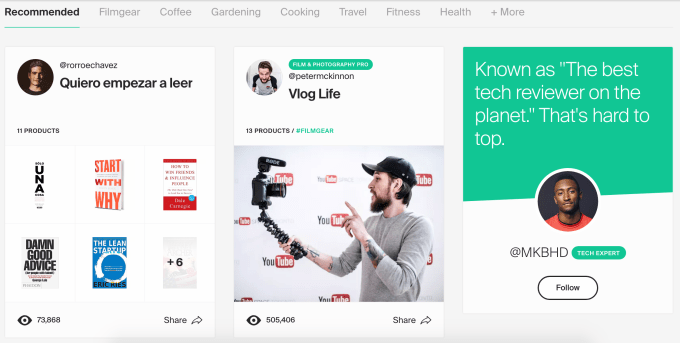
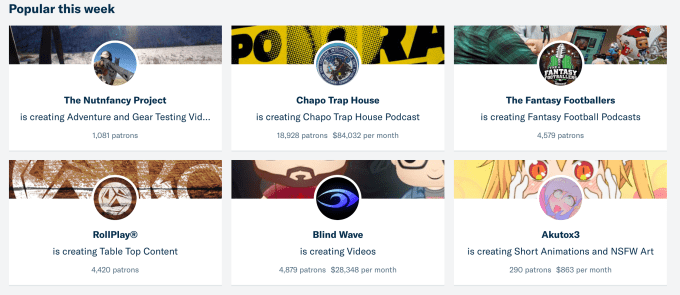
If content creators want to sell pricier monthly content subscriptions, offering stickers, pins, signed photos, or t-shirts can convince fans to pay a higher fee and keep them loyal with a physical connection. That’s why patronage platform Patreon just acquired Kit, a startup building a merchandise logistics backend so creators don’t have to fiddle with spreadsheets and stuff envelopes themselves.

“Over 60 percent of today of Patreon creators either want to or are already delivering some kind of physical merchandise” says Patreon’s VP of Product, Wyatt Jenkins. Together, they could help Patreon creators develop merch items that fans subscribe to get ahold of, potentially shelling out for $10 or $20 per month tiers rather than basic $1 or $5 online content-only tiers.

The deal could also help Patreon stay ahead of YouTube and Facebook, which are encroaching on its subscription patronage model. Patreon now has 2 million patrons backing 100,000 creators. It paid out $350 million over its first 5 years through 2017, and expects to send creators another $300 million in 2018, while taking a 5 percent cut.

Financial terms of the deal were not disclosed. 90 percent of Kit team, mostly product and engineering talent, will join San Francisco-based Patreon though they’ll stay put in NYC as a satellite office the rest of the year. Kit had raised $2.5 million from Social Capital, Expa, #Angels, Precursor, and Stanford’s StartX, as well as angels like Ellen Pao and Slack’s April Underwood.

“When we think about merch, it’s never been fully about the thing — the sticker or the t-shirt — there’s this relationship. This human-to-human connection” says Kit co-founder and CEO Camille Hearst.

Kit was in the process of pivoting towards merchandise logistics and raising a Series A when it began talks with Patreon, leading to the acquisition. The startup was originally built as a way for social media stars and online celebrities to earn affilliate marketing fees by recommending products to fans through Kit, which took a cut of the referral dollars. Some creators showing off their “Kit” of camera equipment, sportswear, or caffeination supplies were earning tens of thousands of dollars.

“We were at a stage where everything was going in the right direction. We had seen strong growth in monthly active users and how much creators were making” Hearst says, noting Kit had reached $15 million in gross merchandise value. “It just seemed like we would be able to accelerate what we were doing by joining with Patreon. Merch is very transaction focused compared with a subscription.” Hearst explains, touting the high lifetime value of recurring payments over one-off purchases. “You can help creators earn a lot more money if you use merch to sell subscriptions.”

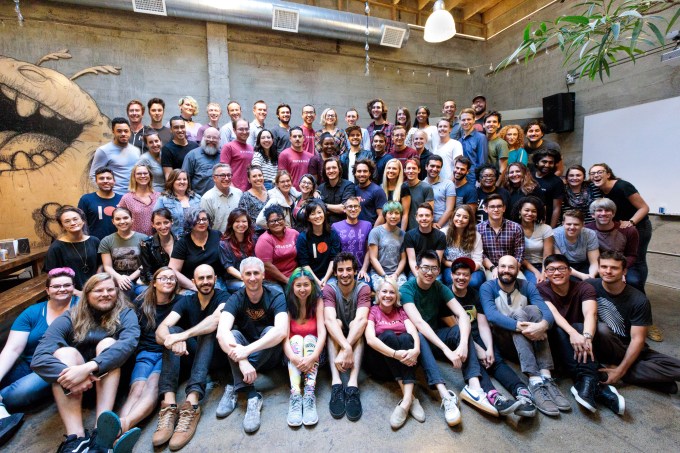
The pre-Kit Patreon team

The plan at Patreon is to build out a new open merchandise provider platform. Creators will be able to choose between a variety of merch partners ranging from those that turn their existing logo into physical goods to those that will design items based on merely vague ideas from the star. But in the meantime, Kit won’t be shutting down or ditching its affilliate program because “we don’t want to turn off any revenue streams” that creators depend on, Hearst promises.

“Right now creators have to choose between different merch partners” without collective bargaining power or enoug data to know what works, says Jenkins. “We can have set pricing for all those merch partners that will be lower than they can get on their own”, while alleviating creators from having to juggle spreadsheets of who gets what and mailing it all themselves.

The plan for Patreon to monetize merch is a little less clear, though Jenkins says “We’re going to grow the pie and we want a piece of the growth.” The idea is that using Patreon’s merchandise platform will incur extra fees beyond the skimpy 5 percent it earns on subscriptions. If adding a merch item significantly boosts the subscriber number for a certain tier, Patreon will take a TBD cut.

“We want creators to make a living. That’s not a side hustle. You have to make more money year over year, You have to be able to do things like buy a house or get healthcare” Jenkins concludes. “All the other platforms are ‘give us your content and we’ll give you a little side change’. That kind of led us down the mech path. Creators are were begging for merch.”


from Social – TechCrunch https://ift.tt/2JgqzAr Read More Detail!
,

Noticeable – Easily keep your audience updated on what's new


Noticeable is a change log as a service. It helps to improve customer engagement and churn by notifying your users about product changes, updates, and new features. You can create a product changelog or newsfeed in seconds. The service features an In-product Widget and a Timeline. It has support for scheduled publishing, team collaboration, user segmentation and multi-language. The service also offers an API along with hundreds of integration via Zapier.

View startup


from BetaList - Discover tomorrow's startups, today https://ift.tt/2JiLsHn Read More Detail!
,

Mapsted Navigation – The world’s most advanced indoor navigation app


Mapsted is a free, easy-to-use app that provides state-of-the-art indoor navigation in shopping malls and other indoor facilities. No more staring at directory signs or getting lost in a busy mall. Mapsted works in any building that Mapsted has mapped; just download it once and use it everywhere.

Mapsted lets you search for stores, products and services by name, category or type. It also lets build your own custom profile by entering your preferences, interests, shopping behavior and other information. With that, Mapsted and its partners can deliver you a shopping experience that is customized especially for you.

View startup


from BetaList - Discover tomorrow's startups, today https://ift.tt/2JlQYJn Read More Detail!